Norwegian Bokmål
 Swedish
 French
 Belgium Dutch

Analytics and data improve restaurant profitability because they turn everyday activity – bookings, orders, payments, staffing and guest flow – into clear decisions you can act on. Instead of guessing what works, you can see it, measure it and improve it week by week.
1) You stop losing margin without noticing
Small problems quickly pile up: too many voids, discounts given ‘just because’, items that are often comped, or menu prices that don’t keep up with rising ingredient costs. With the right data, you can spot patterns early and fix them before they become the norm.
What to track:
- Refunds, comps and discounts – by reason, time and employee
- Average discount per day or week
- Items with unusually high waste or many returns
Impact on profit: fewer losses, better control and a healthier gross margin.
2) Improve your menu for profitability, not just popularity
Sales data shows what guests buy. Profit data shows what you should promote. When you combine the two, you can build a menu that both sells well and makes money.
How to use the insights:
- Promote high-margin winners through menu placement, upselling and sales prompts for staff
- Rework low-margin bestsellers through portion size, recipe, price or supplier
- Remove menu clutter that slows down the kitchen and sells poorly
Impact on profit: higher average profit per order, faster service and less waste.
3) You staff smarter and protect your most important hours
Labour is one of the biggest costs – and also one of the easiest places to lose money by accident. Data helps you match staffing to demand, so you are not overstaffed during quiet hours or understaffed when it really counts.
What to track:
- Sales per hour and day
- Guests served relative to hours worked
- Labour cost as a percentage across the week
- Bottlenecks at peak times, for example at the bar, in the kitchen or at payment
Impact on profit: lower labour costs without compromising the guest experience.
4) Turn more tables without rushing guests
In many restaurants, profitability is limited by capacity. Analytics helps you see where time is lost: slow ordering, gaps between courses, long payment times or tables standing empty between parties.
What to track:
- Average table time per daypart
- Time from seating to first order, first item served and payment
- Payment time by method, for example at the table compared with at the counter
Impact on profit: more guests at peak times and higher revenue per seat.
5) Reduce waste with better forecasting
Waste often hides in everyday routines – too much prep, oversized purchases or not adjusting to weather, events or season. Data helps you forecast demand more accurately, so you buy and prep closer to what you will actually sell.
What to track:
- Sales trends per item, both weekly and seasonally
- Shifts in demand by day of the week
- Impact of events and holidays
- Sell-through rate and stock-outs if you track inventory
Impact on profit: lower food costs, fewer stock-outs and more consistent quality.
6) You increase the average check with targeted upselling
Upselling works best when it feels relevant. Data shows which combinations people already like and where there is room to add something high-margin without being pushy.
What to track:
- Attach rate, for example how often fries are added to a burger
- The best-performing add-ons and upgrades
- Patterns in drink pairings
- Differences in average check between employees
Impact on profit: higher revenue per guest with minimal extra effort.
7) Promotions that actually pay off
Discounts can drive traffic, but they can also wreck your margin if they are not measured. With analytics, you can see whether a promotion brought in profitable guests or just cheaper orders.
What to track:
- Sales uplift during the promotion compared with normal weeks
- Margin impact, not just revenue
- Return visits after the promotion
- Which channels bring in the best customers
Impact on profit: fewer promotions that feel good but don’t pay off, and more profitable growth.
Conclusion: Data improves restaurant profitability by helping you make better decisions on pricing, menu design, staffing, speed of service and waste – every week. The goal is not more dashboards. The goal is simple, repeatable actions: fix what drains your margin, invest more in what works and run your business with control instead of gut feeling.
Caspeco offers a wide range of integrations with close partners, with the ambition of simplifying the restaurant workflow. Browse all integrations here.
How can POS integrations help you save time?
Saving time is about more than having the right solutions – it is also about having the right integrations. The days when restaurant owners guessed guest numbers, bestselling dishes and guest behaviour are over. Learn how to manage customer data, see what sells in real time and understand how reporting works. Are you making full use of your system? Run an evaluation to see whether its features help you save time and money.
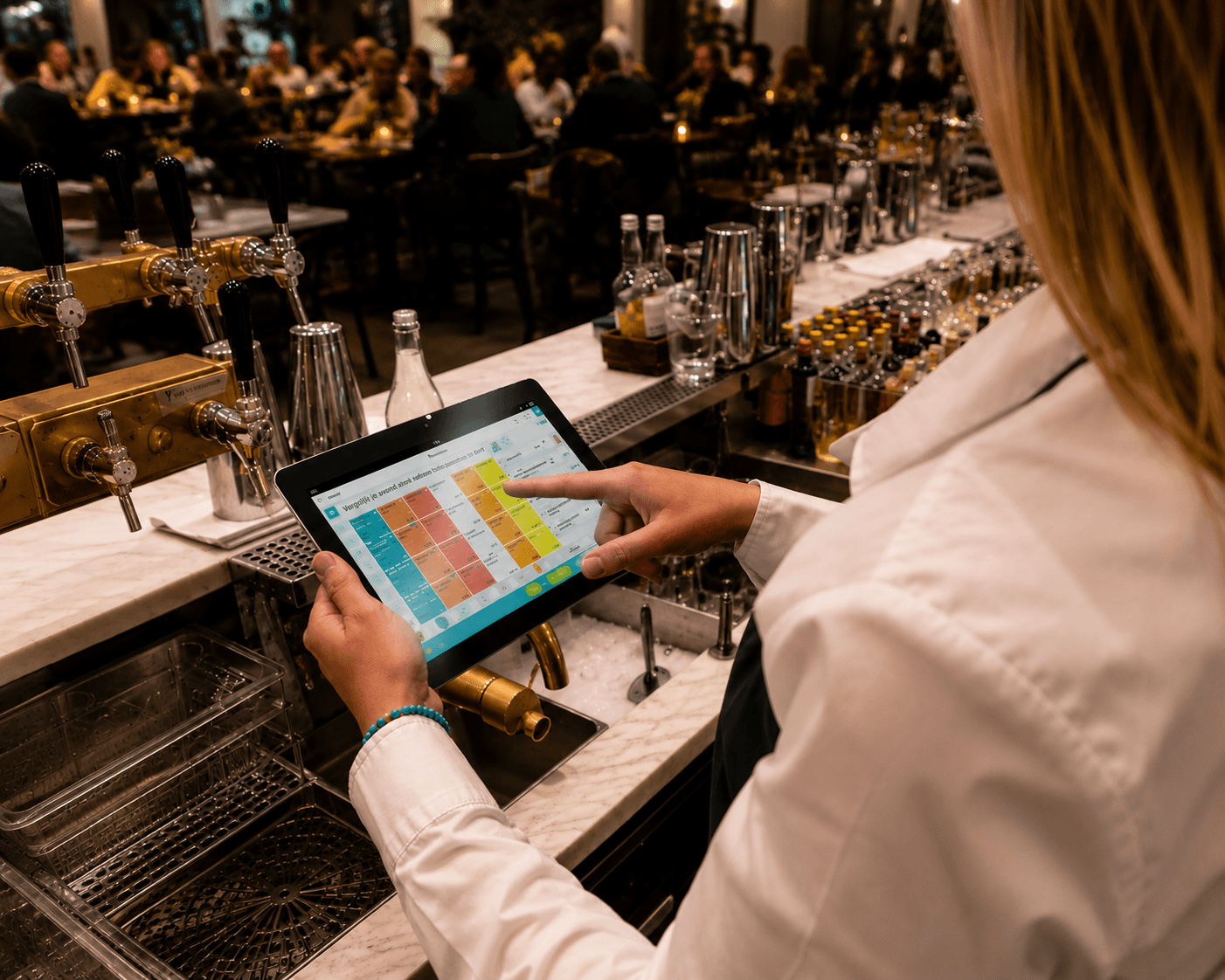
Although a POS system is mainly used for orders and payments, you can do so much more with a modern solution. With a handheld POS, staff don’t have to run back and forth to the till, which saves a lot of time. They can take orders and payments right when guests ask for them. All of this saves time.
[Download How to choose the right POS system for your restaurant – complete guide included]
Younger generations expect a personalised restaurant experience. Loyalty programmes give you good insight into guest behaviour and help you save time, because you get data-driven answers to your questions.
Caspeco offers an all-in-one solution for restaurants, with POS, analytics, table booking and staff management under one roof, including QR ordering, inventory, guest loyalty and accounting. We also make tips and payroll easier. With Caspeco’s POS system, you get a clear overview of what is sold in relation to stock levels. You stay on top of costs, staffing, bookings and invoicing. That way, you can save both time and money.
Want to know more? Book a demo today!